
Denials workflow for a healthcare billing operation
A worked description of how we would run and instrument claim denials for a practice group, from remittance intake to appeal and root-cause reporting.
We measure: Denial rate by payer and codeSoftware, cloud, commerce and advisory that modernize how you operate.
Digital Transformation overviewFinance, procurement, customer service and back-office work, run by experts and accelerated by AI.
Business Process Management overviewTurn raw data into decisions, with analytics, AI, data management and modern data infrastructure.
Data & Analytics overviewNeed a role or stack that is not listed?Tell us who you need. We will say plainly whether we can staff it.
All roles and models Hire Developers Interview a shortlist within 48 hoursTell us the role, the stack and how long you need them.See how hiring works
 Start from a defined scopeEach solution packages the process work and the engineering together.All solutions
 Built around how your sector worksEach page covers the processes we run and the systems we build for that industry.All industries
 We do the work, then build what makes it fasterOne team across the process and the software.About Intelyza
Find out what is actually driving revenue, churn and cost, with analysis your finance team can reproduce and defend.
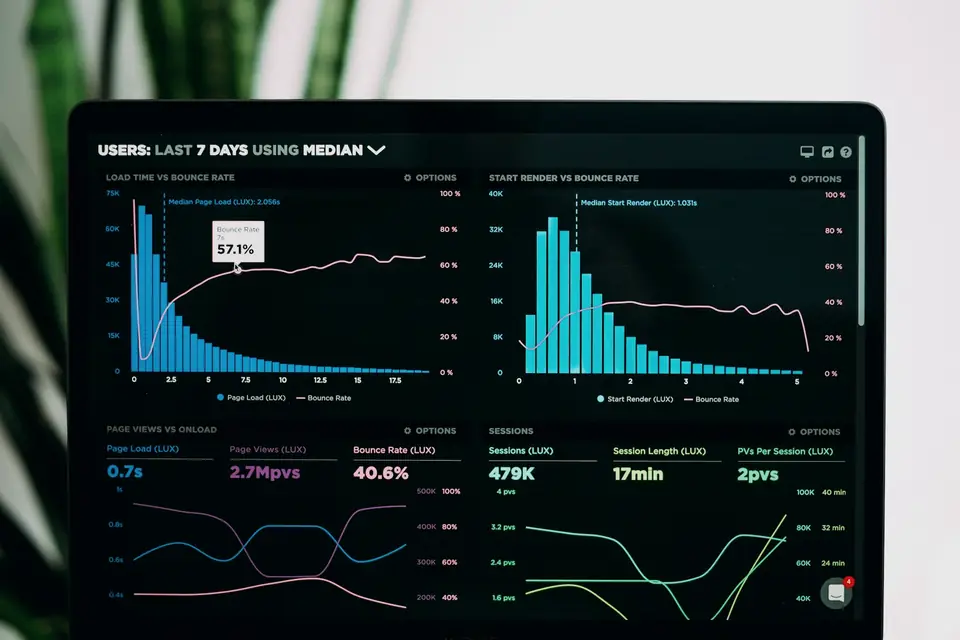
Advanced analytics is the work that starts when the dashboard stops answering.
We run segmentation, driver analysis, cohort studies and experiment design on your own data, then hand over the code and the reasoning. It suits operations, finance and growth leaders who already have reporting and keep asking why a number moved.
Models for demand, churn and risk, with backtests and honest error ranges.
Power BI models and dashboards built on star schemas, with measures finance agrees on.
Charts and reports that make the decision obvious, for the people making it.
KPI definitions and tracking that show what is improving and what is not.
Demand and cash-flow forecasts your planners can check and adjust.
Step 1 of 5
We turn a vague worry into a testable question, tied to the decision it informs and the data that could answer it.
Step 2 of 5
We profile source tables for gaps, duplicates and definition drift before any modeling starts, and report what is usable.
Step 3 of 5
Exploratory work in notebooks surfaces the patterns worth testing, and we share rough findings early so you can correct course.
Step 4 of 5
We build the analysis, stress-test its assumptions and mark the places where the conclusion would change if the data did.
Step 5 of 5
We deliver the readout, the code and a walkthrough, and agree with you who owns the rerun cadence.
Worked examples of how we would structure the engagement.
A worked description of how we would run and instrument claim denials for a practice group, from remittance intake to appeal and root-cause reporting.
We measure: Denial rate by payer and code
A worked description of how we would build a Shopify storefront with a demand forecasting layer that informs purchasing and stock allocation.
We measure: Forecast error by categoryA stable team that works only on your product, with a delivery lead and shared rituals.
Best for: Product companies with a steady backlog and a roadmap beyond a single release.
Individual engineers or analysts who join your team and work under your direction.
Best for: Teams with managers in place and a specific skill gap or short-term capacity need.
A defined scope, deliverables and acceptance criteria for an agreed price.
Best for: Well-defined builds with stable requirements, a clear end state and a single decision maker.
We run a recurring process for you to agreed service levels, with AI on the repeat work.
Best for: Recurring, rules-based processes you want run reliably without managing a team.
The people who do the work sit with the engineers automating it, so what gets built matches how the work happens.
You deal with one owner across operations and engineering. No hand-offs between a BPO vendor and a dev agency.
AI handles the repetitive volume. Exceptions, approvals and judgement calls stay with named people you can talk to.
We record how the process performs before we touch it, so any change can be checked against where you started.
Reporting describes what happened. Advanced analytics tests why it happened and what would change it. We start from your existing reports, then add the statistical work needed to separate real drivers from noise.
We say so early. A short data audit tells you whether the question is answerable, what is missing and what fixing it would take. Sometimes the honest finding is that the evidence is too thin to decide on.
Yes. Every deliverable includes a plain-language summary of the method, its assumptions and its limits, plus the code. If a finance lead cannot explain the approach to their CFO, we have not finished.
Not always. If the data you need can be extracted and trusted, we analyze it where it sits. If the same extracts are rebuilt by hand each time, we will recommend pipeline work alongside the analysis.
Power BI is where most of our modeling work happens, because the DAX and semantic model discipline matters. We also build in Tableau and Looker Studio. If you already have a tool, we usually stay with it.
Send a few lines about the work. A person reads it and replies within 24 hours.